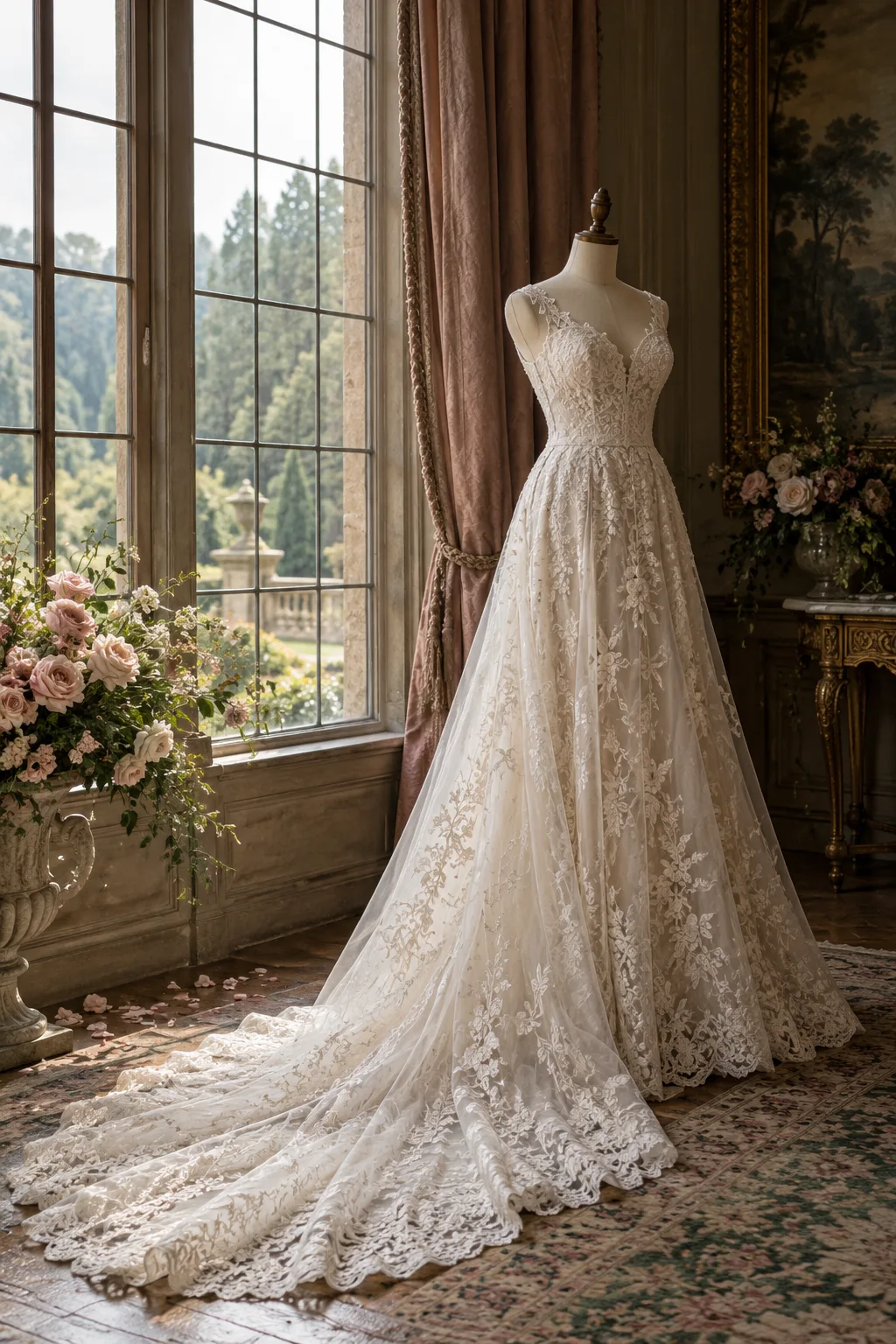
Start wedding dress shopping by asking salons about the current ordering and alteration windows for the gowns you are considering. Work backward from your wedding date, allowing space for appointments, delivery, fittings, and collection. There is no universal deadline: made-to-order, custom, sample, and ready-to-wear purchases follow different processes.
A planning timeline is useful only when it reflects the actual supplier. Treat broad advice as a starting framework and written commitments as the information that governs your order. If your wedding is soon, say so at the first inquiry rather than falling in love with an option that cannot be ready.
Before your first appointment
Set an outfit budget that includes more than the gown. List alterations, shoes, underlayers, accessories, pressing, and possible delivery or storage charges. Keep a separate line for any outfit change. A clear total helps the salon show you realistic choices and reduces surprises after an emotionally exciting appointment.
Collect a small range of inspiration images, including different shapes. Note what attracts you to each: the waist, sleeve, texture, or movement. A short explanation is more useful than dozens of photographs with no shared feature. If you like a romantic direction, our Victorian-inspired gown guide can help you name the details.
Ask about appointment length, guest limits, sample sizing, accessibility, photography rules, and fees. Share any needs that would make the visit more comfortable. Choose companions who can give calm support without turning the appointment into a vote.
At the first salon visits
Try a few silhouettes even if you think you know your preference. Sit and walk in the samples. Notice how the bodice feels and whether the skirt suits your venue. Ask what the sample demonstrates accurately and what will differ in your ordered size or selected fabric.
Keep notes after each visit: designer or style reference, price, alteration assumptions, order deadline, and your immediate impression. Do not rely on photographs alone. A still image cannot tell you whether a sleeve restricted your movement or the fabric felt pleasant against your skin.
If you need time, ask how long the quote or availability remains valid. Avoid assuming a sample will still be available later. Equally, do not let a vague sense of urgency replace the questions you need answered before making a substantial purchase.
Before placing an order
Read the written terms carefully. Confirm the exact style, color, size, measurements process, payment schedule, estimated delivery, cancellation terms, and what happens if changes or delays occur. Ask which details are estimates and which are contractual commitments.
Clarify who performs alterations and how those appointments are booked. An alteration allowance is not the same as an agreed fixed price. Ask what is likely to be needed for your chosen design and whether complex work has separate lead times.
If you are considering design changes, get them documented before paying. A verbal suggestion that sleeves “could probably be added” is not a confirmed construction plan. Ask the relevant specialist whether the change is feasible, what it will cost, and how it affects timing.
While the gown is being prepared
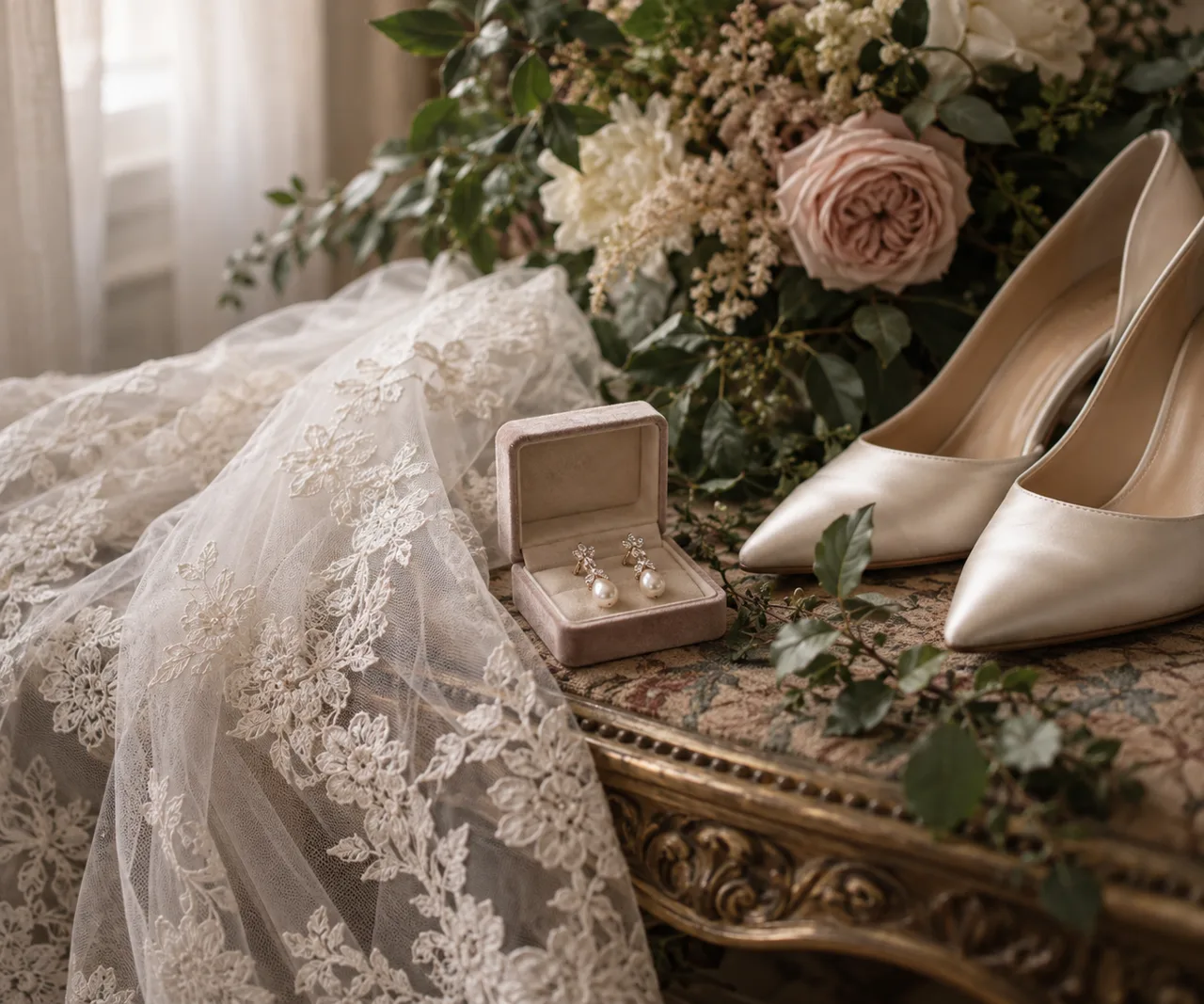
Use the waiting period to choose shoes and underlayers in consultation with your fitter. Changes to heel height or support garments can affect the way the dress sits and the hem is assessed. Do not buy specialist items solely from generic advice if your dress requires a particular solution.
Keep supplier communication in one place. Record delivery updates and the next action date. If a planned checkpoint passes without news, contact the salon directly. Repeatedly checking social media for clues is less useful than a clear request for an order update.
Coordinate the gown with the rest of the celebration at a broad level. Our vintage palette guide can help with accessories and flowers, but the outfit does not need to match every table detail. Personal comfort and a coherent overall mood are sufficient.
At the alteration appointments
Bring the items your fitter requests, usually including the intended shoes and relevant underlayers. Describe how you expect to move during the day. Sitting for dinner, walking outdoors, and dancing may reveal different needs. Ask permission before recording instructions so you can review them later.
Test the practical details: fastenings, neckline security, sleeves, hem, and train management. If there is a bustle, ask the person who will help you to attend an appropriate fitting if possible. A fastening that looks obvious in the workroom may be less clear in a dim reception space.
Raise concerns early and specifically. “The sleeve pulls when I reach forward” gives the fitter more useful information than “Something feels wrong.” Confirm the next appointment and what work is expected before it. Avoid requesting major late changes without understanding the risk to timing and cost.
Collection, storage, and transport
At collection, inspect the gown according to the salon's process and confirm care instructions. Ask how it should be supported, stored, and transported. Different fabrics and embellishments need different handling. Follow the supplier's advice rather than applying an online cleaning trick to an unfamiliar material.
Plan where dressing will happen and who will help. A clean, uncluttered area with appropriate hanging space can make the morning calmer. Keep food, makeup products, and wet flowers away from the dress. Pack only an emergency kit that your supplier considers suitable.
If you have a shorter timeline
Tell salons your exact date and ask specifically about options available within it. Samples, off-the-rack gowns, and ready-to-wear designs may be possible, but condition, fit, and alterations still need assessment. Do not assume that immediate availability removes the need for fitting time.
For a tighter overall budget, pair this approach with our vintage wedding budget guide. Decide which outfit details matter most and where you can simplify. A clear, flexible brief gives specialists more useful options to offer.
Your timeline should end with a dress you can wear comfortably and a plan you understand. Confirm real supplier dates, leave room for adjustments, and make the final handover as deliberate as the first appointment.