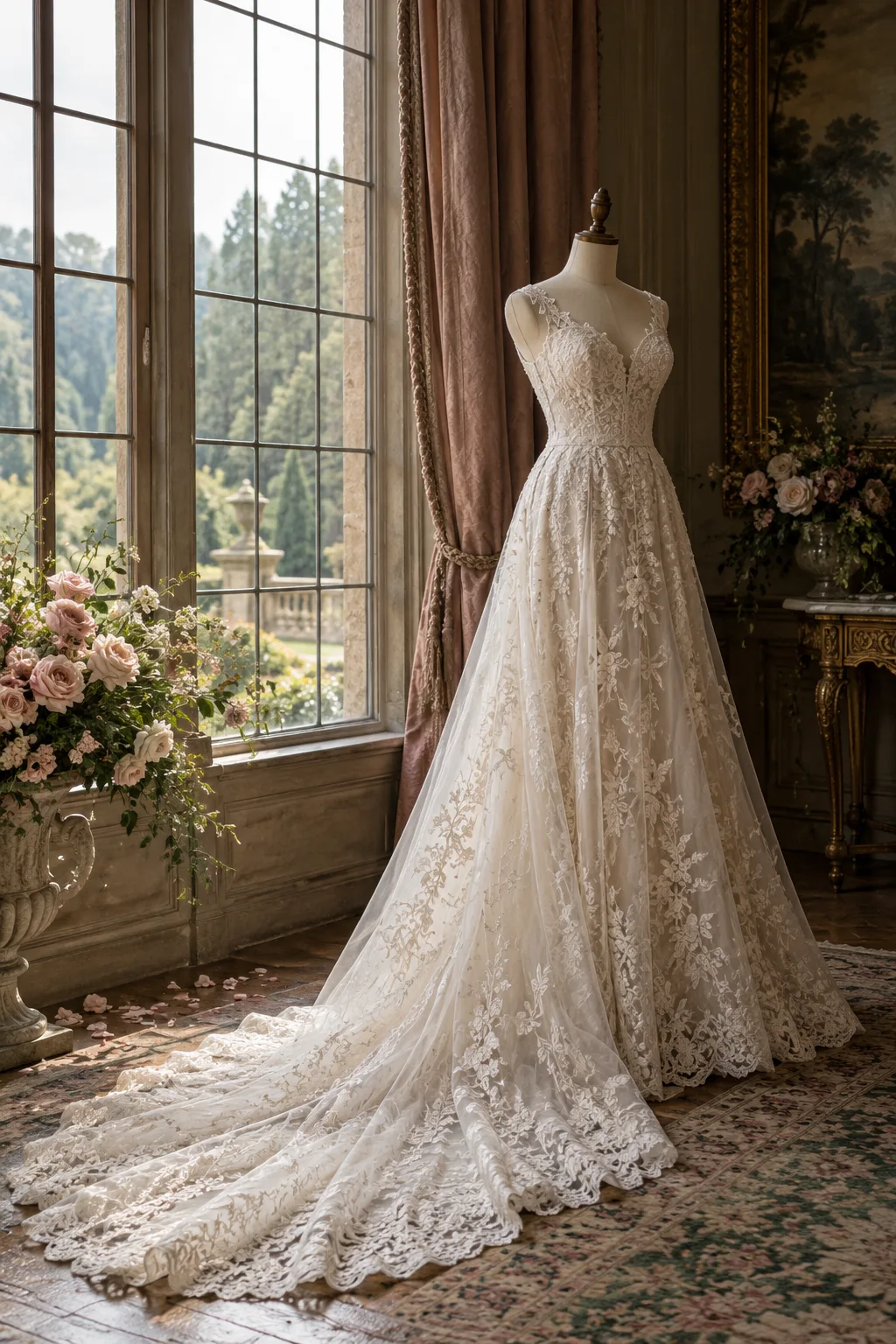
A Victorian-inspired wedding dress works best when you borrow a few recognizable details—lace, a defined waist, a graceful neckline—and adapt them to the way you want to move and feel. You do not need a historical costume to create a romantic bridal look. Start with a silhouette you enjoy wearing, then choose the period references that feel personal.
The word “Victorian” covers a long period with changing fashions. Here it describes a contemporary wedding aesthetic rather than a promise of historically exact reproduction. The goal is a gown that looks considered in photographs and feels comfortable throughout a modern celebration.
Choose the silhouette before the decoration
An A-line skirt is a useful starting point if you want volume without a very wide footprint. A fuller ball gown creates a more formal presence, while a fitted bodice and softly gathered skirt can feel gentle and relaxed. A narrow skirt with lace sleeves may suggest vintage elegance with far less fabric.
Bring photographs of three different silhouettes to an appointment. Ask to try each before deciding that one shape is “yours.” Notice where the waist sits, whether the bodice stays in place, and how the skirt behaves when you turn. The label matters less than the proportion on your body.
If your venue has narrow aisles, gravel paths, or a crowded dance floor, consider the practical footprint of the skirt. Ask how a train can be bustled and whether you can manage that fastening with help from one trusted person. A beautiful silhouette should support the event you are actually planning.
Pick one or two romantic details
A high neckline, covered buttons, scalloped lace, or a softly shaped sleeve can each establish the mood. Combining every reference at once can make the outfit feel busy. Try a restrained approach: a clean skirt with a detailed bodice, or an uncomplicated neckline with delicate lace sleeves.
Look closely at the lace repeat. Large floral motifs read differently from tiny geometric patterns, especially in photographs taken from a distance. Place a sample beside your bouquet palette and venue photographs. You are looking for a shared feeling rather than an exact match between every element.
Embroidery, beadwork, and appliqué also affect weight and texture. Touch the inside seams where possible. A raised motif near the underarm may feel different after several hours than it does during a brief fitting. Ask what can be adjusted without disturbing the construction.
Make sleeves a comfort decision
Sleeves can transform the dress, but they also influence movement. Raise your arms, reach forward as if hugging someone, and sit with your elbows bent. A fitted lace sleeve should be assessed in motion. Ask the specialist whether the fabric has stretch and how much adjustment is realistically possible.
For a warm setting, an illusion sleeve or detachable layer may be worth considering. For a cool ceremony, a separate wrap can give more flexibility than choosing a heavier dress solely for the weather. Neither option removes the need for a venue-specific comfort plan.
Compare fabric in your real lighting
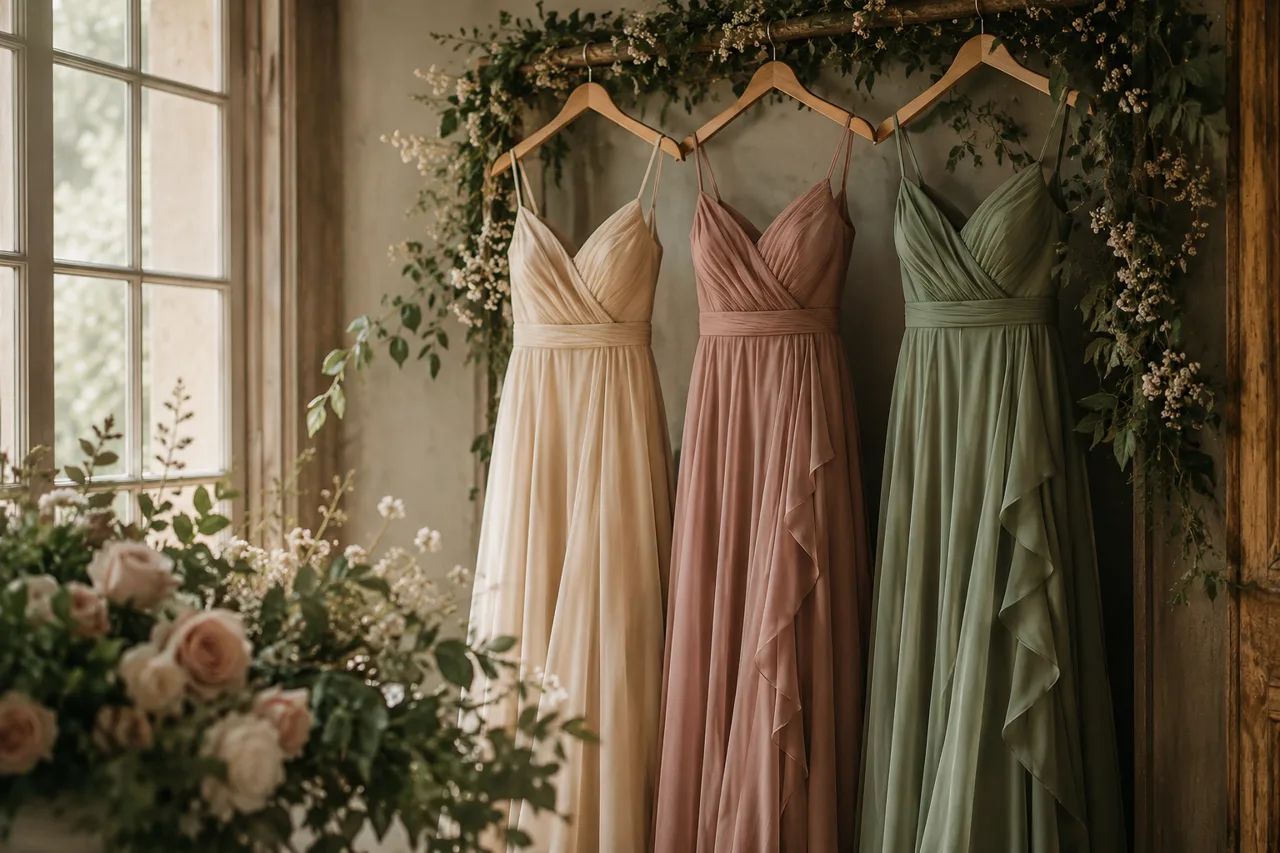
Ivory, cream, champagne, and pale blush can look very different under warm lamps and daylight. View fabric near a window and away from direct spotlighting if the salon allows it. Hold it next to any accessory you already own rather than assuming that all “ivory” items will coordinate.
Think about how the fabric moves. A structured textile holds a clear shape; a softer one can create a fluid outline. Neither is automatically more timeless. Choose the effect that works with your silhouette and the atmosphere of your celebration, then check the care and handling instructions.
Give accessories a clear role
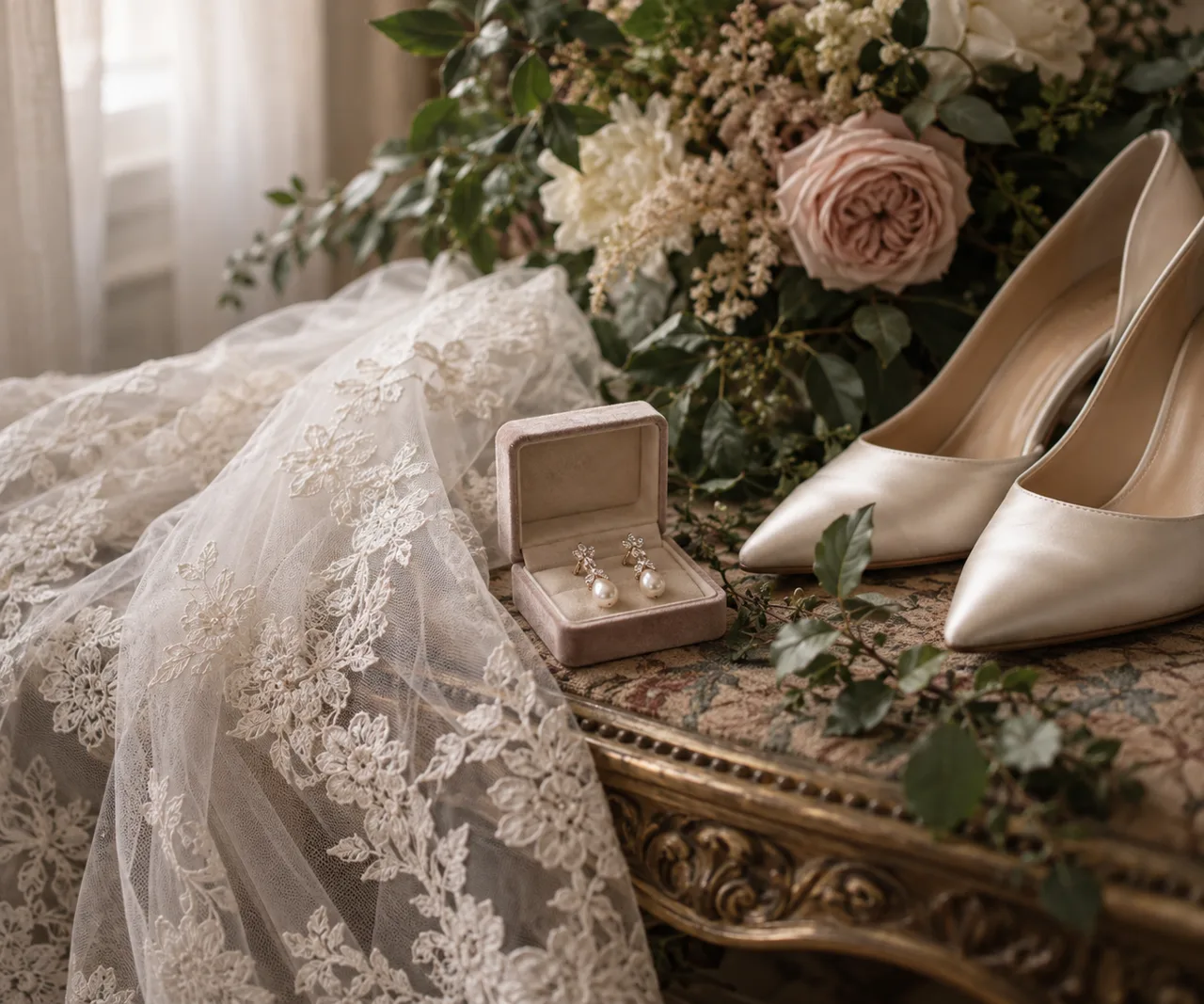
A pearl earring, an heirloom brooch, or a lace-edged veil can be the finishing detail. Start with one focal point near the face. If the neckline is elaborate, try simple earrings before adding a necklace. If the bodice is quiet, a more distinctive accessory may make sense.
Compare veil lengths while wearing a sample dress with a similar skirt. Look at the back as well as the front. A veil edge that crosses the most detailed part of the bodice may obscure the feature you love. Photograph the combinations, with permission, and review them after the appointment.
Shoes deserve the same attention. Bring the likely heel height to fittings and ask how the hem will be established. For an outdoor celebration, test your chosen shoes on a comparable surface. A second pair can be useful, but a substantial height change may alter how the hem falls.
Turn inspiration into a useful appointment brief
Write down three priorities and three flexible preferences. For example, your priorities might be comfortable sleeves, a defined waist, and room to sit easily. Your flexible preferences might be buttons, a train, and a specific shade of ivory. This gives the salon a practical brief without narrowing the search too early.
Keep the complete outfit budget in view: gown, alterations, accessories, underlayers, shoes, and any pressing or transport. Ask for written estimates and clarify which services are included. Do not assume that a sample dress price represents the final cost of the finished look.
Coordinate the appointment sequence with our wedding dress shopping timeline. If you are still deciding the overall mood, compare the combinations in our vintage wedding color palette guide.
A fitting checklist to keep
- Sit, walk, turn, and reach while wearing the sample.
- Check neckline security and sleeve comfort.
- Ask how the train will be managed after the ceremony.
- Confirm what alterations can and cannot change.
- View the fabric beside accessories in natural light.
- Record the complete estimate and delivery assumptions.
A gown becomes personal through the choices you make around it. Keep the details that delight you, leave room for comfort, and allow the silhouette to do some of the work. Victorian inspiration is most convincing when it feels like part of your own style rather than a list of historical features to collect.